Outdoor Musical Lawn Rockets

  I’m starting to hear the undeniable stressed out moans from teachers trying to survive the end of their year.  So much to do, so little time right? I remember staring out the window with the kiddos wanting to be outside just as much as they did. So what happened? I took them outside! We played music games! We had fun! Sure it was a little chaotic, but that’s the price to pay for some fun outdoor learning!

Here’s one of the games we played:

What you’ll need-

1.) Two of those foam air powered rocket launchers found in any toy store

11253798_10100331733600447_1905909129_n

2.) Yarn or ribbon for markers

3.) Paper with different notes and rests written on them. (Attach them to clipboards to weight them down)

4.) Hand Held whiteboards with markers.

Setup:

  • Mark out different lines outside on the grass with the yarn or ribbon to look like a target.
  • Place the paper with the different notes and rests at each marker, one per marker, sort of like I drew out below (sorry for the horrible computer drawing):

screenshot_211

  • Draw 2 measures on the whiteboards and mark them in 4/4 time.

Procedure:

    The point of this game is to have students launch the rocket launchers to the target to build two measures on their board in 4/4 time. Where ever the rocket lands closest to they have to use that next in their composition. If they land on a note or rest that does not fit, then they continue until they find a note that does. First team to fill two measure in 4/4 wins!

  • Divide the class in half and have them line up behind the start line.
  • When you say go, the first player for each team grabs the rocket launcher and launches it towards the targets.
  • They have to go retrieve their dart and determine which note or rest they landed on and race back to their team’s whiteboard to fill it in.
  • When the first player is done, the next player goes and so on.
  • If a player lands on a note or rest that does not fit in their board they cannot use it and the next player must go.
  • First team to fill in their measures wins! *If you want to add a level of difficulty, have them clap the rhythm or sing the solfege in order to pass!*

What sorts of activities do you do outside at the end of the year?
Outdoor Music Class Kit

 The sun is shining, the birds are singing, and the grass is green. Who can’t help but to run out side and dance around in the fresh air? As the school year end looms closer I always remembered taking my classes outside to do activities. Not only did they want to be out there, but I did too. Staying inside the classroom with the sun shining was never my idea of fun. 

So what is up for this week? I decided to do a follow up to my popular post: The Essential Centers Kit and start building a bucket you could grab at a moments notice to have class outside!

11245275_10100331733610427_99392861_n

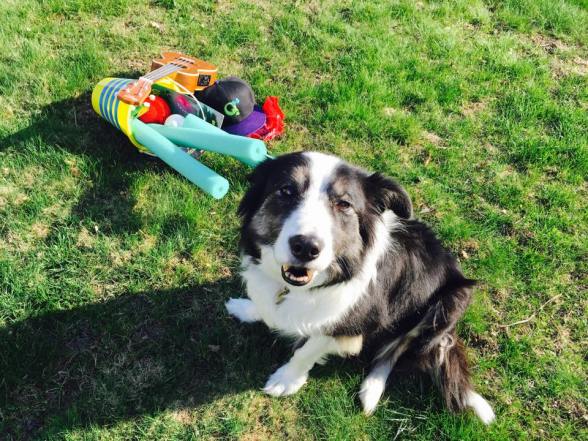
Dog not included in the kit! (I got puppy photobombed)

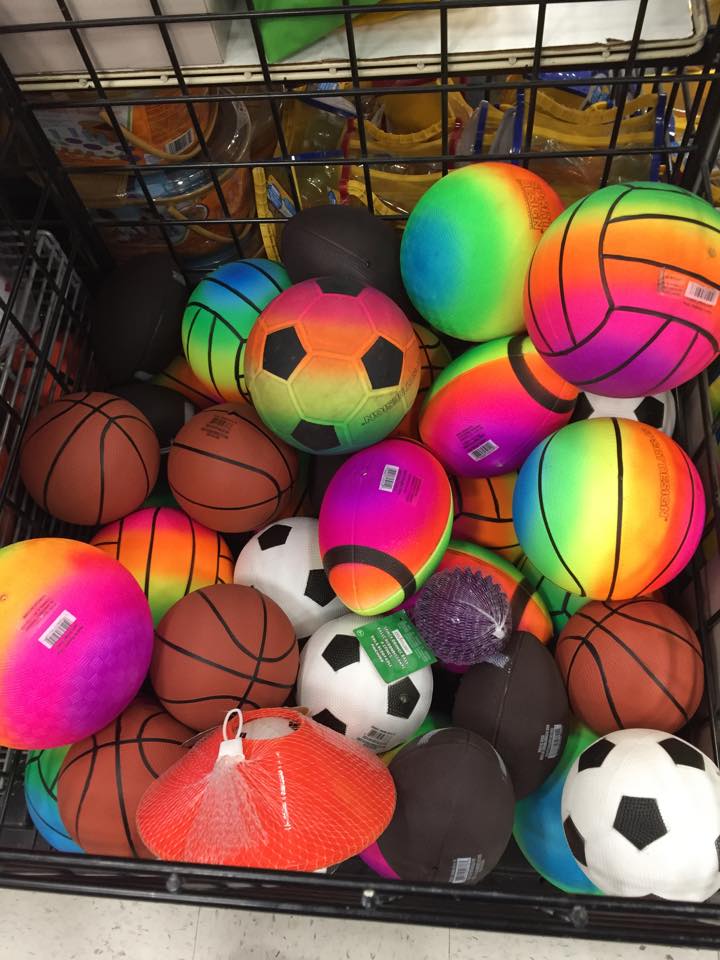
11210293_10100331733595457_525321402_n A ball is always a great choice for a kit. From passing around during a circle game to playing a quick review question activity.

11258616_10100331733670307_763634784_nBecause, who doesn’t need a musical book for outdoor story time?

11256407_10100331733665317_1699743257_nThese stones are perfect for some pavement target practice or even a way to keep track of who has not had a turn yet in a game.

11210288_10100331733660327_1159355553_nSidewalk musical compositions anyone? Chalk rocks!

11259031_10100331733650347_1866173371_n   Cut some pieces to set game boundaries or start/finish lines.

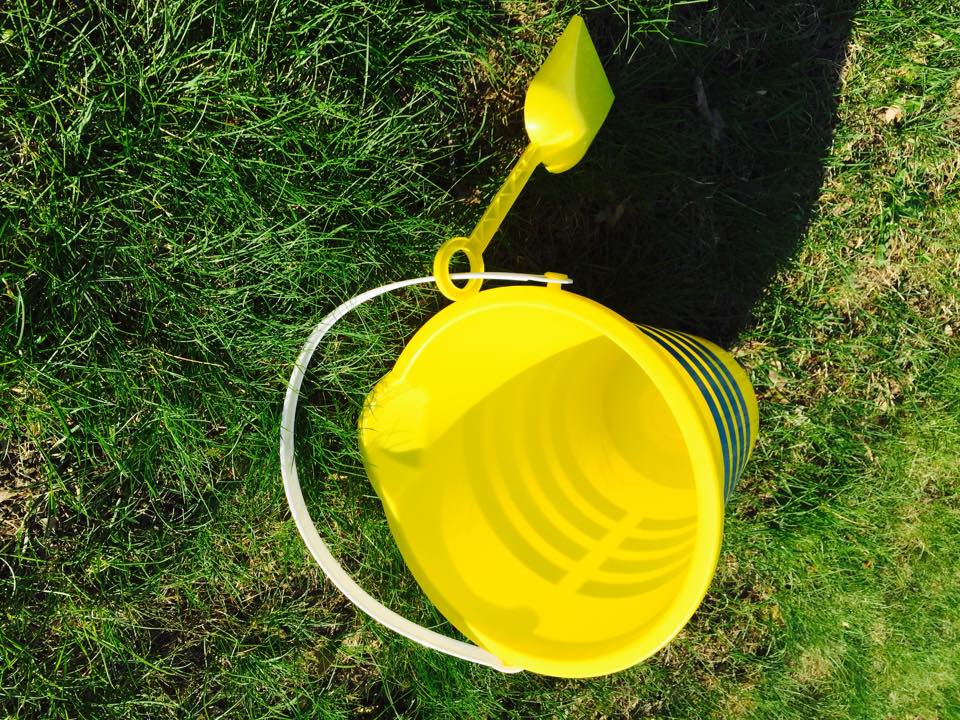
11245299_10100331733645357_1291690507_n  You always need a bucket to keep everything in! But hey, why not use it in the sand box? Or maybe as target practice? Throw the ball in, if you miss you get to answer a review question. If you get it in you get to pick a song for the whole group to sing!

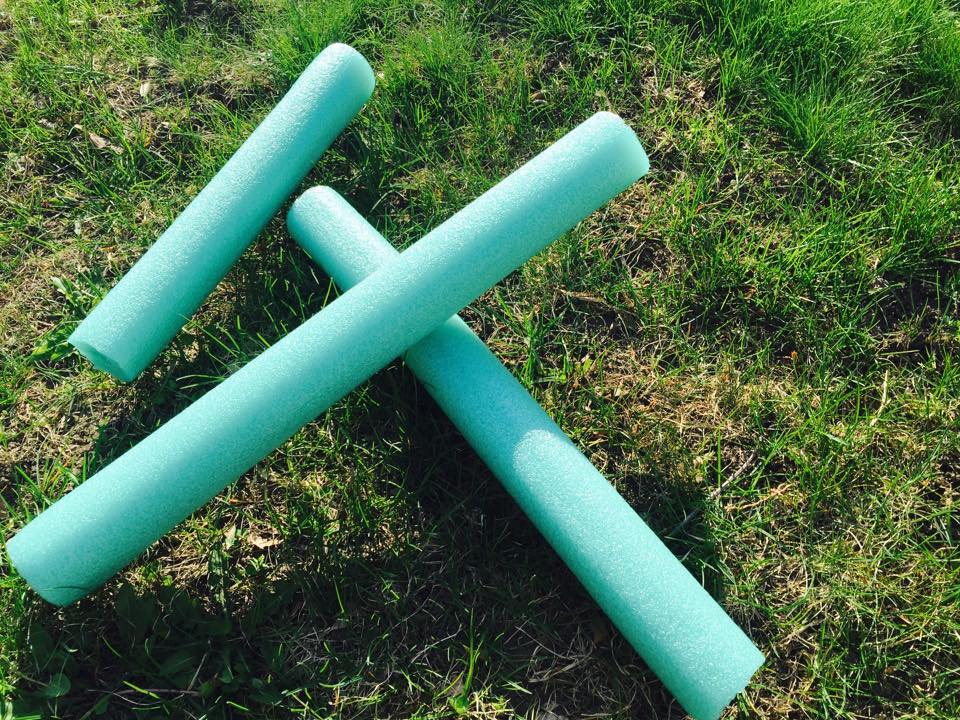
11121591_10100331733635377_721623593_n  The PE teacher I use to work with used cut up pool noodles as a way for students to tag each other without smacking into each other. These are perfect for some instrument  or music trivia freeze tag!

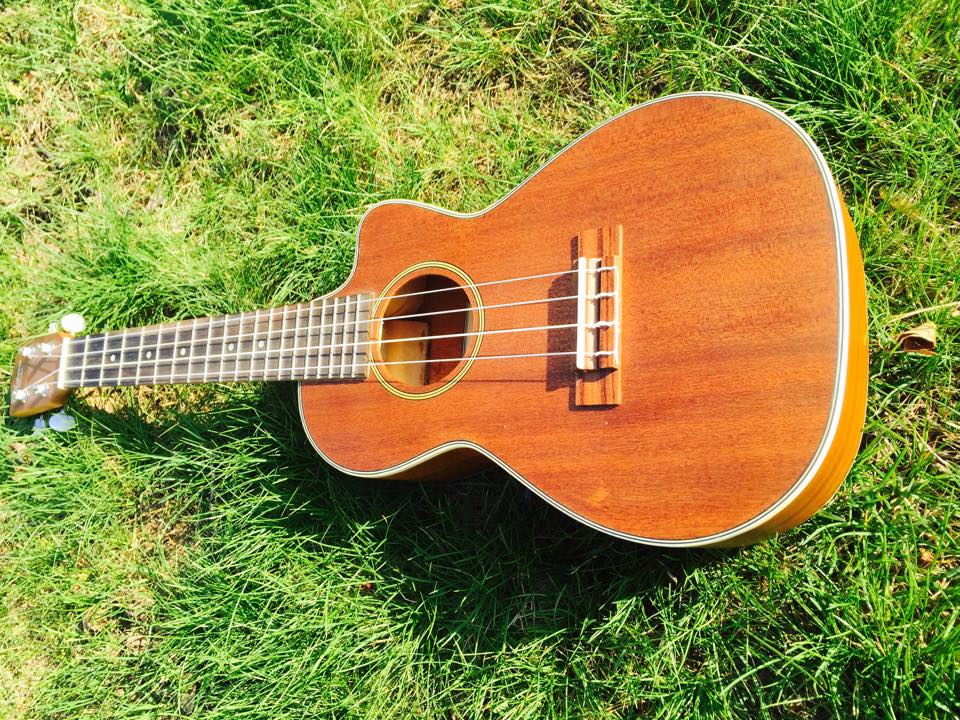
11251707_10100331733630387_1239796880_n Ukelele travel sized and fantastic instrument to take outside with you to practice songs they have been learning throughout the year in the nice green grass and sunshine.

11253803_10100331733625397_810043865_n Bandanas are so versatile, there are many ways to use them outdoors! I always keep one handy.

11253798_10100331733600447_1905909129_n    I used the twine to create markers representing different notes and rests,students had to aim in order to build measures with designated meter. Say if they were building a measure in 4/4, they would need to get notes that would only fit the measures.

11251579_10100331733620407_1714595342_nSometimes, sun glasses were not enough to keep the sun out of my eyes. Also, if there was a larger group out I had on a brightly colored cap so my students could find me when it was time to go inside!

11208698_10100331733615417_758481732_n

What would you add to this kit?

Data Driven Projects- Science and Music

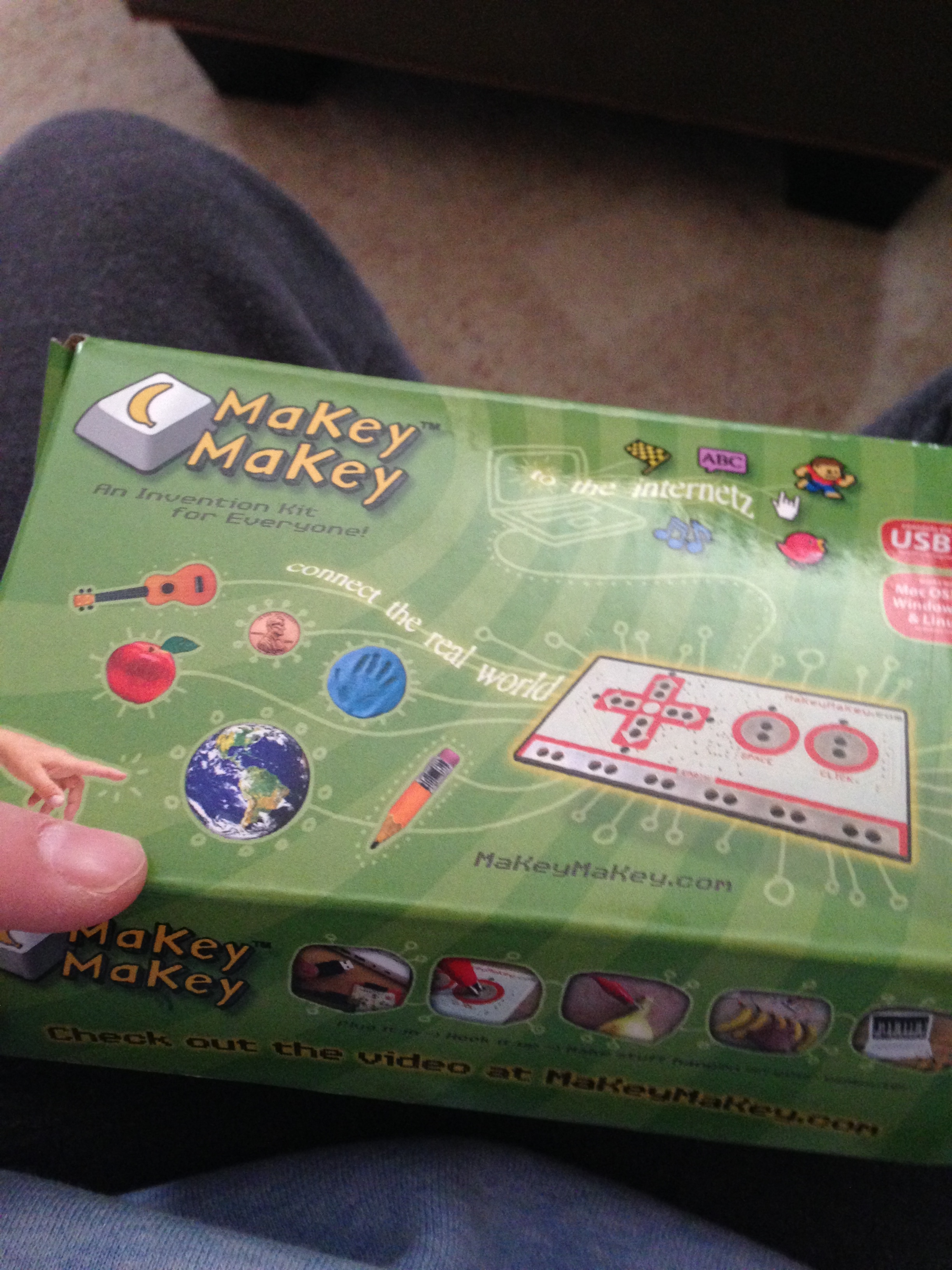
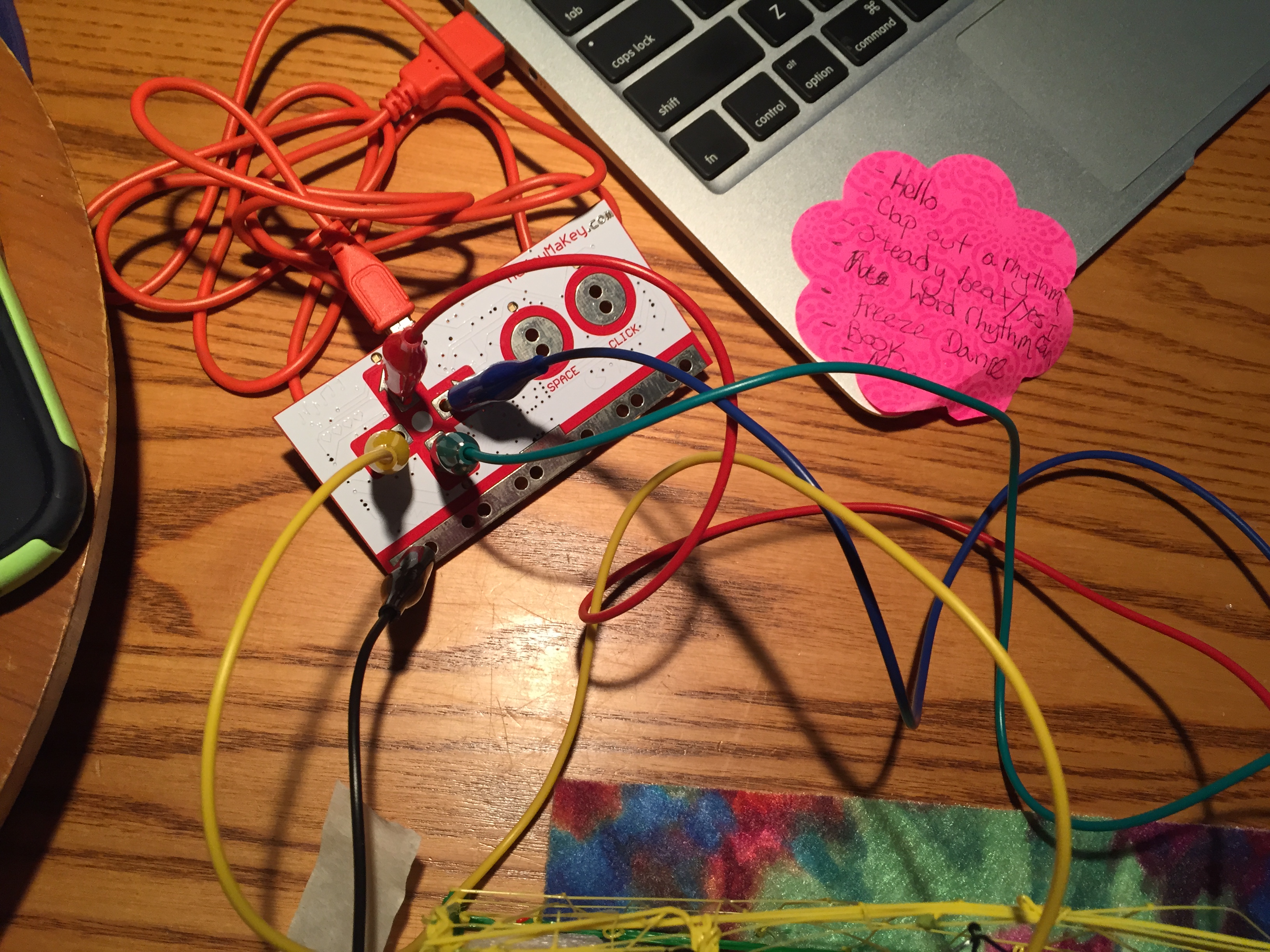
So I have decided to put together a project for your reading pleasure today. This stems from my experience in the classroom working with others to build projects that were data driven and cross curricular, in order to show student improvement in certain areas while intertwining music with other subjects. This project brings together Science and Music using the Makey Makey invention kit. I actually had a Quaver teacher I visited about a month ago that was using the Makey Makey’s in her classroom for a large project and this inspired this post.

    Projects like this are always a big help when showing administration why the arts need to stay put in schools. Most cannot understand through a performance or visiting your classroom. Giving them solid data showing student growth might not be the ideal situation for most arts teachers, but it can be such a big help in defending the arts in schools. If you can relate it to other subjects such as science or geography, it adds more depth and meaning to the work and proves that music and the other arts provides students with real life skills that are crucial to their growth. 

So in order to start a project such as this you always need to come up with a way of assessment, I usually go with a little mix to get different data. One method includes a pre/post test so in order to acquire real data you would need to give the pre test before learning begins.

The overall goal of this project is to have students learn what electrical conductors and insulators are and how to build a closed circuit while discovering how to build an instrument using the Makey Makey and composing a composition and labeling with solfege to play on their new instrument which has 5 pitches (Do-So) to choose from. 

Music

Quaver lessons- Some recommended lessons to go along with this project are below. Since solfege and composition are the heart of this project. Using some lessons from Quaver like the ones I’ve set as examples below will be a great start to teaching the concepts:

Solfege

2nd Grade Lesson 11

Composition

1st Grade Lessons 19-20
Science-

Partner up with a general classroom teacher or science teacher in your building to teach about the

  • Scientific Process
  • Electrical Conductors and Insulators

Make sure you have a few sets of MakeyMakeys

Here is how it would go when you are ready for the project:

  • Students come up with a hypothesis on what materials available will hold a current to create sound with the MakeyMakey.
  • They will test and will design a Makey Makey instrument out of those materials.
  • They will compose a piece for their instrument using Do-So in either graphic or traditional notation.
  • Each student must create and perform their own composition.

Data- There would be two ways I would collect data.

Pre/Post Test: I would keep it very simple with maybe 5 questions like the ones below and give it before the learning begins and after the project has been completed to get accurate results and compare the results after.

1.) What is an electrical conductor?

2.) What is an electrical insulator?

3.) Do all substances conduct electricity?   Yes? / No?

4.) Why is the wiring in the Makey Makey made from copper?

5.) What is a closed circuit?

I create a rubric in order to assess the compositions the students would create to play on their new instruments making it easy to grade:

1 2 3 4
Uses variety of notes and correct Solfege The student can compose a piece using the full range of solfege available and correct notation with no assistance from the teacher. The student can compose a piece using the full range of solfege available and correct notation with little assistance from the teacher The student can compose a piece using the full range of solfege available and correct notation with a lot assistance from the teacher The student cannot compose a piece using the full range of solfege available and correct notation with assistance from the teacher
Melodic Contour The student can compose a piece using a smooth melodic contour with no assistance from the teacher. The student can compose a piece using a smooth melodic contour with little assistance from the teacher. The student can compose a piece using a smooth melodic contour with a lot of assistance from the teacher. The student cannot compose a piece using a smooth melodic contour with assistance from the teacher.
Performance The student can perform 90-100% of the notes accurately. The student can perform 75-89% of the notes accurately. The student can perform 60-74% of the notes accurately The student can perform less than 50% of the notes accurately.

What kinds of cross curricular projects have you done in you class?

IMG_1789

Mused Motivation Day

Are you ready for some Musedmot Mischief?

10408163_348264545320602_6190343159233934757_n

Musedmot is coming up quick!  A professional development opportunity built by a music teacher for music teachers. I wanted more from my professional development and wanted to do it for free, so what happen? Music Ed Motivation Day did thats what! 

We congregate on Twitter and talk all morning and into part of the afternoon about various topics using the #musedmot hashtag. Sprinkled in-between are brand new Skype chats that will be recorded and archived on a YouTube feed. Almost a year has almost come and gone completely. Can you believe it? I haven’t been sick once this year either! Let’s hope this Musedmot doesn’t finally tackle me.

As in the tradition, I’ve made changes to try to make the event better. I want you to participate, talk, and have some fun too. There are no right or wrong answers, just creative ideas! Cut out the lurking in the shadows and come join us! Skype sessions are brand new, come Skype with your internet colleagues.

On the fence? think you’re not techie enough to keep up? You’ve got help! On our website there is a Registration page where you can sign up for the Skype sessions and put your Twitter handle in there so I can find you and help you get in on the action! 1 on 1 tech support just cannot be beat!

Some things you should know:

  1. The big event starts at 10am est on Saturday June 20th!
  2. Let’s start filling up the schedule with topics. Comment, tweet, FB me your suggestions. This year’s theme is Making Mischief
  3. I AM LOOKING ACTIVELY FOR MODERATORS, PLEASE CHECK OUT THE SCHEDULE AND LET ME KNOW YOU’RE INTERESTED! You don’t need to be an expert to moderate!
  4. I always am looking for corporate sponsors. We can work out anything from advertising to giveaways to even letting a rep from the company come in and talk to our participants about their product.
  5. This is a come and go as you please event, you are more than welcome to come in and out during the day.

         Want to know more? Check out our website: www.musedmot.webs.com 

Those Who Are Creative, Never Say Impossible

     Continuing in the spirit of making mischief and being innovative, I’m reviving a post from a few months ago. Having the latest and greatest technology in your classroom might be great, but what happens for those who can’t get it? Should that inhibit what you can do? What are you teaching your students by saying “We could have done this if we had better tools.” It’s ok to take what you have and explore every single little angle you can use it. Take an old computer speaker and rewire it to use with your iPod, turn your mobile device into an interactive slate for your board through a remote desktop app, even turn your whiteboard into an interactive white board using a Wii Remote. Show your students that it doesn’t matter what you have, its how you use it that is important.

I couldn’t have lived without my technology in the room and its becoming a staple in every classroom, that is why I’m so surprised when someone tells me they DO NOT have some sort of technology in their teaching space. I ask why and I get answers like “there’s not enough money” or “they don’t think there’s space in my room” or even “they don’t think I’d use it”. Well phooey, time to give up right? WRONG! It’s time to get creative.

Look! I made an iPhone/iPod projector for 5 bucks just to prove a point for this blog post! (and it WORKS!)

securedownload

 Check out how to make this at this website

   There are so many ideas for low cost classroom technology alternatives out there on the web that the excuse “I just don’t have it” is really not an excuse to me anymore. Tell me you don’t have a projector I will MAKE you one right there on the spot. Once you get creative with these low cost alternatives the last objection “they don’t think I’ll use it” flies right out the window! Sometimes, you just have to go a little further to prove to your tech department and administrators that you too can use technology successfully and creatively in your music classroom.

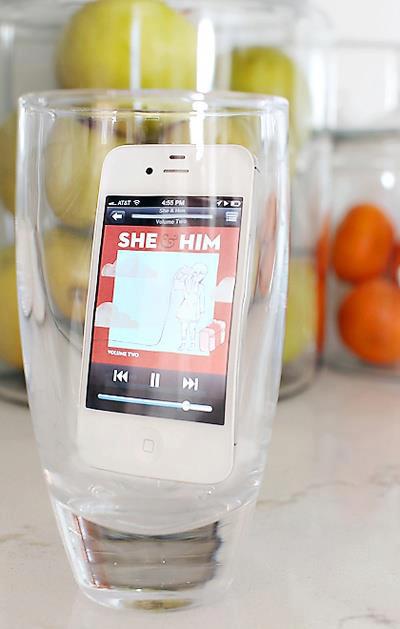
  No speaker system? Have a glass handy?

306056_327668937336882_1675843162_n

Or if you have a second you can throw together this puppy with a cardboard tube and two solo cups

5df3e1a2dcc630561a94c2fc1914445d

      If you’re really ready for a challenge and itching for a smart board, try using a Wii remote control: http://johnnylee.net/projects/wii/ 

        Those excuses people give me for not having technology in their classroom? Yeah, I’ll make you a projector or set of speakers out of things on your desk and recycling bin, I know you’ve got an iPod or smartphone handy everybody does. There are so many of these awesome hacks online in places like Pinterest .

     So remember, technology doesn’t have to be a fancy state of the art projector or a 1,000 dollar speaker system. If you’ve got 5 minutes and the right stuff sitting in your room or house, the possibilities become amazing.

IMG_4944

What mischief have you gotten into this week?

Maker Resources

     I’ve got Maker on the brain this week. I am a Maker at heart and have realized I always have been. Learning more by doing and figuring it out myself being able to just tinker and PLAY. With all the testing and scheduling that goes on in schools, I think a lot have really lost sight of the power of letting kids just play. How it can affect the brain and benefit a child’s learning. Tying together technology, engineering, critical thinking skills, and so much more. Maker Spaces, clubs, and fairs are popping up all over giving kids the motivation and inspiration be go above and beyond and MAKE. 

IMG_3430

  I’ve found there are some really cool ways to incorporate being a Maker into education. Through circuitry, model design, even just a few pieces of cardboard. Turning followers into Makers might be a daunting task but it reveals some pretty amazing results.

My Mom (who is the big thinker and Speech Pathologist) and I (Being a Maker and an EdTechie) recently presented to a group of local educators about what the Maker Movement is and how it relates to Play talking about effects on the brain. Check out our resources at my new Maker Page: http://www.cdwinal.com/makerresources.htm

FullSizeRender

I just ordered another Maker tool for my collection, will update on how that goes soon!

What is Music Class? How Do We Define it?

Did you know the term “music class” is not in any dictionary? Even Merriam Webster’s can’t define it. screenshot_15

If a dictionary cannot define what we do, then how do we define it? How do you see yourself describing what a music class is to a child who has never seen it? Or maybe an outer space visitor??? (kidding.) When thinking of our so called “pitch” to admin and parents about what we do, how many times do you use the same words over and over? We end up with the same presentation or the same spiel, updated once in a blue moon. Here are some words that I came up with:

    Singing  Notes

           Piano Scores Listening

                  Dancing Keyboard Drums Xylophone

                                Moving Clef Rests Brains Playing

  What else can be added? What else is a keyword that truly defines what you do? That is really the question isn’t it? The best sales people can define their product in less than a minute. If you were selling why your music class needs to stay. How would you pitch it?

IMG_4944

Up To No Good

Have you ever thought about breaking the rules? For years music has fallen into a routine, it is almost like one knows what to expect when walking into a music classroom. We walk out of college with a set way to start teaching. Passed down from our professors who had spent many years in the classroom. It is sort of considered the basics in a way. A solid foundation to jump right into a job with, a timeless way to teach music…but, isn’t it time those basics get an update? Have we followed that timeless way so long that we have become too predictable? What happens when we break away from that foundation and create our own path? 

Imagine being an outsider walking into your music class for the first time? What would you see? What would you think you would expect to see?

Times are changing and what someone would normally imagine seeing walking into a music classroom isn’t what you would find anymore. Music Teachers are up to no good, breaking barriers, finding new ways to teach an enduring subject, and changing their learning environments into innovative masterpieces. Through new techniques, visuals, technology, and mindsets. Music Class is becoming a place for creative change.

But, what happens when we are not given the chance due to that pre notion of what our class should look like? I remember being told “your classroom should be a quiet place where children sit and play only orff instruments and sing traditional songs. They should read off paper scores and you should be at the piano the whole time..” why? why should I do that? I promised myself from that day on that I would swear to be up to no good, smashing down the walls that was once a traditional music class pushing the learning forward. We of course still sang, and danced, and played instruments but who said we couldn’t beatbox our ABC’s, do centers, and write musical compositions on iPads? Even if I had to break a few rules and get into trouble, it made changing the perception of a new music class even more fun.

So I ask you, are you ready to take the pledge?

To always swear to be up to no good.

To push away expectations of what people think you should?

Do you swear to always have fun?

While creating the ULTIMATE learning experience that will be sure to stun?

Would you promise to always be bold?

While creating an experience never before told?

Are you ready to break a few rules?

Creating innovators that are in your school?

     So I give you this new blog series, I’m collecting guest posters along the way. We’ll talk about what defines “traditional” and what are ways mus-educators have been creating new age learning in the music room. Stay tuned for out of this world activities sure to engage, stories that will motivate and inspire, and advice sure to pin you as the mischievous and brilliant educator in your school.

So I ask you..

IMG_4944

Do you solemnly swear you are up to no good?

QR Codes in the Classroom

   Wow! My first conference season is turning out to be quite an adventure. Very very busy, but it has been so exciting to finally meet some of my tweeps for the first time live and in person! I’ll be at several more conventions between now and May so be sure to stop by and say hi at the Quaver booth, and if I’m not there I give you full permission to cause some Quaver mischief in my name. 

Topic of the week? QR Codes in the music classroom.

A great way to start taking your use of mobile devices in your lessons to the next level beyond experimenting and simple substitution. You would need a QR code scanner on your device which is easy to find on any app store (there are many out there that all work great), and access to such QR code makers as www.qrstuff.com. The QR codes download as a picture and you can save and print as necessary.

ForFunApps

  With these QR codes you can link videos to students performing concepts they are learning, link to MP3s of compositions, maybe even scans of worksheets or information on what they are learning. It is a direct link to that content, leaving out typing the address or searching on a search engine for the content.

Try this activity right away-

Interactive Wall:

  • Using the camera app, have students video tape themselves performing various musical topics such as how to sing Piano or how to move Largo.
  • Upload them to an unlisted YouTube playlist and create a QR code using the link to each video.
  • Print out each QR code and pictures to accompany then decorate a nearby blank bulletin board.
  • Every time someone uses the board they just have to scan the QR code to see each video!

Organize apps