I’m going to be honest here, I’m researching an upcoming conference session and am using this post and maybe a few more following to write what I find to refer back to later. Feel free to use, or come see me at OMEA in Ohio or TMEA in Texas this year!
The observation: Professional learning for educators has gained a lot of traction the last few years, so much so that there is so much out there, it’s hard to find a place to start. How do we find or create opportunities for us that will be effective for what WE do in the school community? Sure it’s easy to get an outside group to come in and give a training session, but will it be effective? And will it be implemented? If you can’t answer either of those questions, it might be time to rethink all this.
The most effective tool I’ve seen in building teacher education and skills is to go beyond the presentation, beyond just the 30 minute run down of the topic and you may never see that presenter again, and build followup after that. Most will say “schedule a follow up visit to ask more questions after they’ve tried it” or “Here are some resources to refer back to later”. I think if you want to build true ownership of the implementation, build a community around it where supports are in place to continue learning, discovering, and working together so the expert comes in to help guide, but supports are in place at the school level to continue learning and growing on the daily.
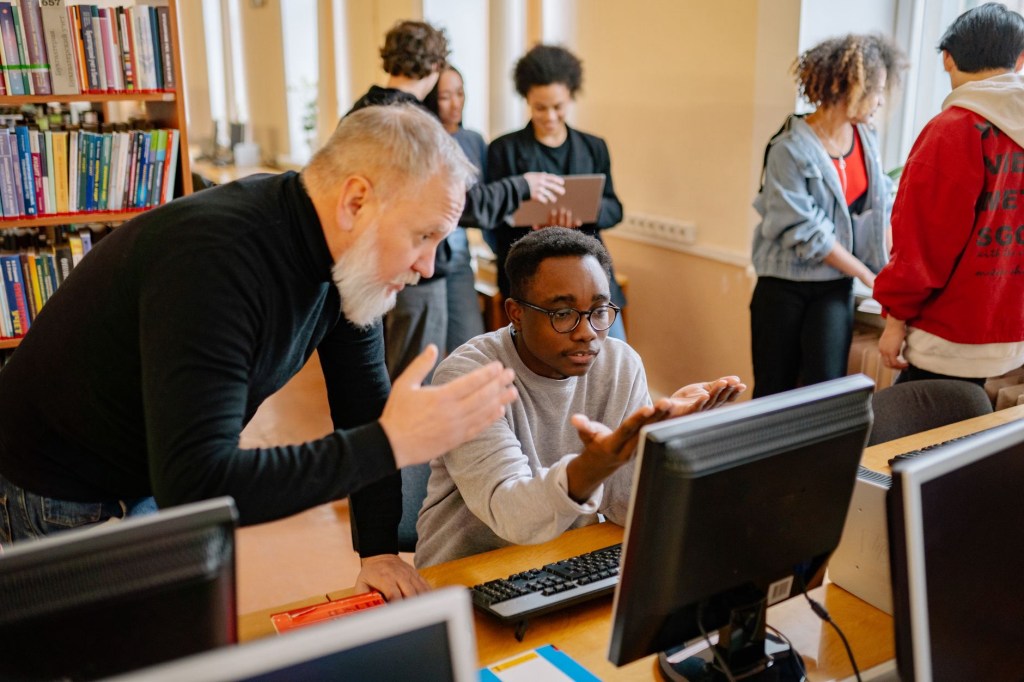
It’s hard to do this without the right tools to stay in communication. As a professional learning specialist who works with teachers a lot. When they walk into the training space. I often hear, it’s been the first time they’ve seen each other in sometimes years. Which is slightly insane to think, that there are some teachers in your district, who might have never met before but have worked in the same district for potentially years.
So with being in a world that has grown tired of technology after the abundance of use during lockdown. How do we stay in touch and build that community during the school year to make sure we are learning what will apply to our own teaching practices? We keep it simple. We keep it straightforward. We try to mix the virtual with formal and informal meetups to build connection.
1. Start a text group. Name it something fun, and encourage discussion in there. Ask questions, start discussion prompts to get the words flowing, take it as an opportunity to organize informal meetups.
2. Build a Facebook group just for your group. There are hundreds of teacher groups out there you can join yourself, but you can also create your own just for your group. I’m not much of a Facebook user myself, I mainly use it to go to the groups and talk to my peers in there. Start discussions, post photos or memes, create events. Get the discussion started so members can grow to realize it is a safe space where they can make their voices heard.
3. Create a shared folder drive that everyone can access to share resources. Create a sense of community where they can work together on resources and district initiatives consistently instead of waiting for the next PD day to share. Tools like Nearpod allow for teachers to create and share presentations for students with each other.
4. Use outside tools like Padlet, Discord, Slack, Google Chat, or Zoom offer free or discounted private group chat tools to be able to stay in touch.
The first step to building learning that sticks is to create a community that will continue the work even after the initial learning takes place. How will you start that with your colleagues this year?
Want more on this topic? Share this with your colleagues, start discussions on what learning you’d like to accomplish together this year. Maybe we’ll discussion how to take the discussions you start and resources you share and bring them into ways to share in person next.
 The Celtic Novelist