To AI Or To Not AI

I am so late to the trend, but in all honesty, I’ve enjoyed spending time seeing how the use of AI has been playing out to discover what its best uses could be. I’ve always been a cautious techie, loving the discovery of new innovation, but always waiting for a bit to see how the reviews come in before I consider jumping in on a new piece of tech. AI has definitely been one newer tool that I can see so many negatives for, but also..soooo many positives.

Let’s talk about the downsides first. First, who saw the research study by MIT about how overuse of ChatGPT can greatly affect the brain? From the article, it says, overuse of AI can lead to severe cognitive debt, lack of originality, and severe problem solving and critical thinking deficits. That’s a lot of negatives isn’t it? With AI it makes it easier for people to ask AI to do anything for them. It’s like a bully asking the class nerd to do all of their homework, or having that overly smart friend that answers all the questions for you before you even have time to think. It tempting to not put much brain effort into a project and using AI to create whatever, whenever and pass that off as original work. The catch is, AI is still a computer that needs to learn. It doesn’t have the option for emotion, it doesn’t have the capability to know everything about a subject or to create something from just a few short lines of suggestion. There is a large margin for error still and requires the human touch to check for facts, add a touch of emotion, and to check for errors. AI could get you started, but it can’t do it all for you.

We also need to remember the privacy aspect as well. With such strong student privacy requirements in school districts, AI tends to keep a lot of information it’s given in order to learn and give better answers. Just asking what it knows about me is a weird feeling. You have to be careful about what information you feed the machine or it could quickly violate your privacy rights and one that happens, it’s hard to fix that.

But, then there are positives. Imagine having a creative collaborator always at your fingertips. Ready to bounce ideas off of, answer your questions, or you can even have it be like me and have it check your grammar and spelling. It could help become a hugely detailed search engine customized to your needs, check your detailed data analysis documents, even help you finesse your marketing copy, and so much more.

Just in the last month I’ve used AI for:

  • Helping me create an outline for an article.
  • Analyzing Google Form Survey data.
  • Helping me answer random questions that Google could never.
  • Finessing some copy I was writing AND checking grammar and spelling.
  • Even helping me come up with ideas for an upcoming workshop.

That’s just what I’ve done, through conversations I’ve had with teachers across the country, there are some wicked cool things they are using AI for to create core memory learning experiences for their students. A lot of suggestions tend to be in the “lesson planning” stage of learning instead of during actual instruction, but when it comes to safely and effectively integrating new tools into education, that tends to be the trend anyway with teachers trying it first before students get involved.

It took decades for education to adopt technology and create policies for best use. New breakthroughs take time to be adopted into instruction.

So how is it being used now in schools? What kinds of ideas can you take and start trying yourself?

  • Did you know it’s really easy to have AI help you create lesson plans or activities quick and easy? ChatGPT and MagicSchool.AI are really easy to use that can help you achieve this. You can ask the tools specifically what you’d like the students to achieve, what you’d like the lesson to be about, and what resources you have available, and they can produce ideas for you. (WARNING: If you try this, check what the tools actually give you, they will still need editing and a lot of finessing before they are fully lessons. Don’t just print off what the tools give you and call it a day.)
  • Have an AI generator to use as a search engine for your students. (For those that have districts strict on student privacy, talk to your IT department about getting a site license for your own ChatGPT hub, there are more ways to lock the private “bubbles” down.) AI engines are on the safer side when it comes to more confined and reduces rogue results for students to search, so instead of an open resource like Google where anything can pop up in this weird internet universe.
  • Creating resources for lessons can be so cool. I recently got to sit down with a teacher who created amazing visuals for their students that helped take them on an adventure without ever leaving their classroom. You can create videos, pictures, and songs from scratch with just a few prompts. Want to show your students what a grand ball may have looked like during the Victorian era? Got you covered. How about help you making a ton of visuals to allow students to talk to Mozart and experience a model of how their life might look based on facts found online. Using generators like Suno also allow students to experience a song writing collaborator, it gives them a venue to experiment with lyrics and genre as they work through the process.Song generators like Suno can be an interactive experience to explore some of the ins and outs of songwriting.

The AI innovation is not something that should be debated whether or not it should be accepted into the education universe, it should be debated how. As with many new tools that have come and gone, we know they can’t be completely erased from education, but how they are incorporated makes the difference.

How do you incorporate AI into your instruction?
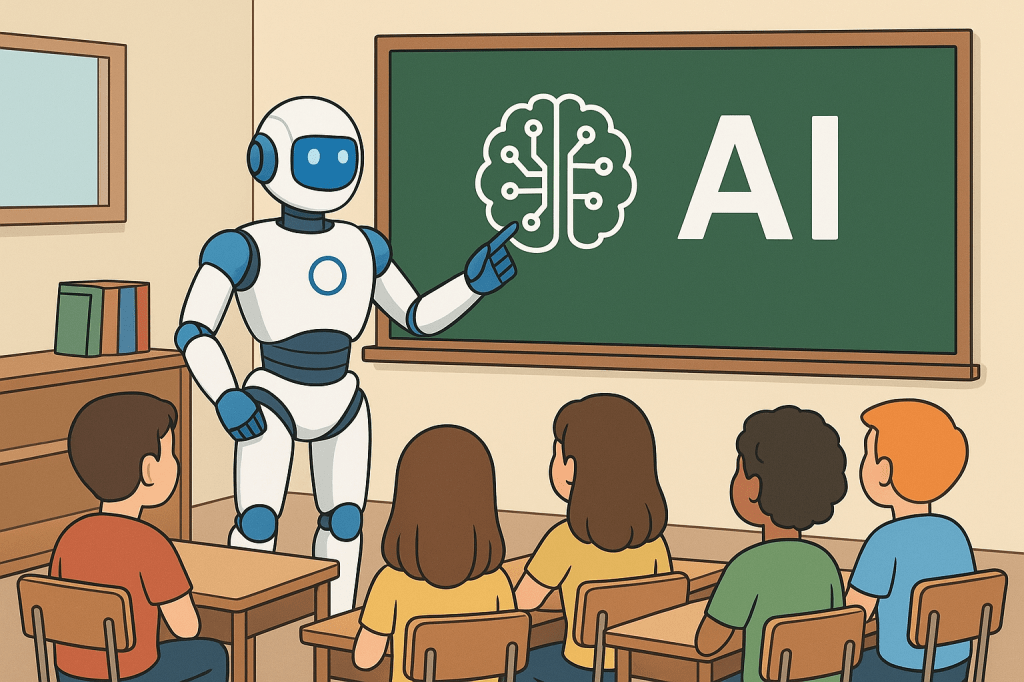
Made by AI

Discovery Learning

If I hadn’t gone into teaching music, I definitely would have become some sort of STEM or science teacher. I looked at Ms. Frizzle as an icon who took experiential and discovery learning to a whole new galaxy. Students crave independence and are more engaged when they have the freedom to get their hands a little messy.

If I hadn’t been a music teacher, I would have been the classroom teacher that constantly had her kids out exploring the community, we would have gone everywhere I could have taken them. Giving students all the opportunities to discover new things, find things they get excited about, and be encouraged to dive in further lights that fire in them that could lead to years of innovation.

Discovery learning is about choice, it’s about flexibility, it’s about motivation, it’s about opportunity, and it’s about collaboration. Learning can be more than instruction, it can be time to work together or work separately to explore what interests them.

So,

1. Give them opportunities to steer their own ship. Doesn’t have to be all the time. Just give them the opportunity to choose when it’s right.

2. Ask for the minimum, motivate them to give the maximum. Motivate them to give 100% even though you might only ask for 70%. Everyone will get there a different way too, and that’s ok.

3. Give them grace and yourself flexibility. It won’t always go the way you want or hopped it would, but that’s ok. They are going to make mistakes and get messy, but sometimes, the best lessons come from the mistakes we make.

Be ready to guide, counsel, and push, all your students won’t take the same road to get down to the same place. But, you can help them navigate those roads whether they be straight or windy to get to the end.

The Problem with Too Much PD

I actually have time to write! Hooray! Life has been weird at the moment, feeling like I’m in a space of change but it’s not time to make those decisions yet. Trying to get back to enjoying life before making those big life-altering choices that will take me back to where I really want to be. For now though, we breathe and go back to what brings us joy.

Now I’ve delt with my topic today for quite some time, but now that I am more in the trenches with it. I find it annoying me more and more. Which is the case of “Too much PD-itis.” It’s the Boy who Called Wolf situation here. Educators have it drilled into their heads that professional devellopment is important. There is nothing better than PD…but when it comes to experiencing it. How many educators walk away actually having a positive experience? Did they learn anything? Or are they in there because their admin said they had to be? It’s become a joke, but such a bad one when we hear the phrases “that PD could have been an email”, or “that PD had NOTHING to do with what I do.” They’re right though! After being a music teacher I lost count of how many professional development days I spent in meetings learning information I would forget by the time I walked out of the room because it had absolutely nothing to do with my subject or anything remotely close to it. The only reason I was there? there was nothing else offered for me to go to. Now mind you, I tried really hard to make as many cross curricular connections as I could to try to make it worthwhile, but 3/4 of the time it never worked out.

I know I am not the only one with that problem. We then also run into the issue of educators not getting the PD they actually need to learn and grow in their profession so they get left behind. Then we get into the topics of educators burning out because they are not getting the proper help and motivation and when a new teacher steps in they need more and, well it’s a whole downward circle of life. None of this helps when so many administrators are calling up PD providers to do something with no rhyme or reason to it.

How do we combat this? Well, we listen, we differentiate, we simplify, we engage. We first listen, what do they need or want? We then provide unique opportunities for teacher to interact with experts who can help motivate and inform. People who can consult on curriculum, give advice on teaching it, motivate and inspire, and oh so much more. We lessen the amount of PD educators are mandated to attend so they can put their focus on really implementing what they are learning. Then, we get their hands dirty. Let’s get them actually getting hands on with the different types of concepts and topics they are focusing on.

So let’s start that, let’s listen. Provide surveys or polls out to educators in the school to learn more about what they feel they need, observe classes to see where deficiencies are, sit in a staff meeting and just ask, or even provide a place outside your office for them to write anonymus suggestions.

I’ve got many more thoughts on this to come..

Photo by u795d u9e64u69d0 on Pexels.com

If you could create any PD for yourself, what would it include?

Professional Learning

I have so many thoughts on the topic of educator learning. It’s been such a highly debated topic for so long and although there is no right or wrong answer because everyone learns differently (everyone hear that, “EVERYONE LEARNS DIFFERENTLY”.) We can make strides to make it better. Especially with the teacher shortage the US is experiencing. Let’s add better professional learning opportunities to the long list of improvements for educators, behind better wages and working conditions of course!

The most powerful thing you can do when it comes to learning something new is to experience it. When you look at a conference, the most popular sessions are the workshops that allow educators to get into the thick of it when it comes to learning. Whether it be completing guided tasks in new resources, discussing new topics with colleagues, doing the activities students are going to do, to even..yes I’ll say it..a field trip to a community partner.

Now the term experiential professional learning is not a new one. When we take out the term professional “experiential learning” is when students get hands-on with the topics they are learning about. Add professional in there and now the audience changes from students to teacher. These types of PD opportunities tend to be the most popular at conferences and district PD days, who wouldn’t want to learn about the power of play playing with Legos?

As I write this, I’m coming off directing a large virtual conference for thousands of educators from across the globe. Create an interactive experience for these attendees that is solely virtual is extremely difficult but also rewarding when you get it right. Have I got this down to a science? Not in the slightest, am I working to make virtual experiences better and more interactive for attendees? You bet!

So what are some tips I’ve learned in trying things out to make learning experiences for educators more interactive and allow them to experience what they are learning?

  • Give them tangible items or ideas to walk away with. Have them build their toolkit to bring back to their learning spaces and try out. Whether it is a new teaching tool or toy or a written lesson plan or instructions to an activity. Don’t make sessions “heady” or overly academic. Make them easy to understand and give the information in an easily digestible language so they can translate it into their instruction.
  • Make it motivating! Give them a reason to be excited to go back and try these things out. Get them involved, guide them as they create and collaborate. We live in an age where being an educator is not something a lot of people aspire to be anymore because of the current state of education. Let’s bring back that spark.
  • Be Interactive! Bring out the toys, bring in the experts (virtually or in person), get them involved in the activities that match their comfort level. Don’t be that “sage on the stage”, guide the collaboration and discovery.
  • Let them know they have support, you never should be a one and done situation no matter how you put your learning together. Give them multiple ways to reach out to you or create a space that is a community where support from you and others can continue well after the learning.

Learning should be fun not only for students but also for educators. Let’s ditch the boring talks and bring back the collaboration and fun, let’s space it out throughout the year so every person feels they can learn at their pace, let’s build support systems to continue the things that are taught. Let’s bring community together to build a better learning space for our students.

From PD to PL, Reigniting the Learning Fire

This is solely an opinion piece. After several weeks of focusing on learning opportunities for teachers in the audience I work with, and attending one of the largest innovative teaching and learning conferences in the US. I am still reeling from just thoughts and experiences and as always, love to think it out by just writing it down. So here we go.

The digital design divide. A term that is new to me, which I recently got to hear more about made an impact in my brain as it is something that we are seeing growing more and more wide as we are walking out of an era of constant new tech and into an era of redefining best instructional practices in order to use it all. As this divide is going to be a part of the OET’s new plan coming in 2024, hearing how this divide was already being combated in several large districts across the country was interesting to hear. The overall mission is to work on better learning opportunities for teachers that are more tailored to them and their needs. As so many of us know, professional development (PD) has been a one size fits all for too long. As we move into the era of professional learning (PL) more customized and varied learning opportunities are the new and better goal. Through more varied and engaging opportunities, support that is more than one-and-done, and easy-to-access resources we can make a bigger and more motivating impact on the amazing educators who are holding our educational system together.

This last week I had the amazing pleasure of attending the ISTE conference in Philadelphia. With thousands of educators attending, even my last flight into Philly was a buzz with excitement. Which leads me to ask the question, how does this conference create such excitement? How does any learning event create such an electrified atmosphere where everyone is so excited to be there and even though it is summer for most, what makes them take time out of their summer break to learn? This is more of a rhetorical question than anything else because it is hard to pinpoint one answer. For me though, it was the ability to personalize my experience. There were hundreds of sessions to choose from, playgrounds to experiment, lounges to relax and collaborate, an exhibit hall four football fields long filled with new innovations, and lots of short product-based training sessions. The sheer amount of options was definitely overwhelming, BUT it was the options that made it worthwhile. It takes some time to orientate yourself into knowing you don’t have to see everything, you don’t have to do everything, you just have to create the path that follows what is best for you.

That to me is really the key when it comes to learning. It’s your admin or professional learning coordinator’s job to create opportunities for you, but then it’s up to you to choose the best path of opportunities and what is going to motivate and excite you and make you better at what you love. You know what’s best for you.

The more flexible opportunities we can create, the more to choose from that allows the learner to find things that are going to get them excited to be there and find out more.

Photo by cottonbro studio on Pexels.com

Where’s the Money Tree?

We all wish we had one, not only for work but also for play. One thing teachers struggle with a lot is knowing where funding for classroom resources is and how to best maximize those funding pots. I hear all the time, “Man, this is cool, but I just don’t have the money.” Your budget for your personal classroom might not have those funds, not might your school budget, but the money doesn’t stop there. You can find so many other ways to acquire additional funds to do what you want to do with the resources you have. When looking for any additional funding outside of your regular budget, just make sure to follow this advice;

Have a purpose and defined outcomes

What I mean is, most outside regular budget resources will want to know what you want to do with the funds and how you will measure success with them. Make sure you have those parameters defined before going to search for funding. Finding a cool project or new initiatives like a permanent center or new piece of technology to create a new learning experience for your students would make it more fun for you as the teacher, but also stand out in a pile of applicants.

So once you’ve got your plan, where do you go? There are a lot of options out there, but here is a place to start based on research from 2023;

  1. AdoptAClassroom.org is a great site to get quick funding from donors to immediately spend in their marketplace with approved vendors. This site does not ask for project proposals but is limited on where you can spend funds. So pay close attention to their approved vendors before jumping in.
  2. DonorsChoose.org does ask for a specific purpose for the funds you are requesting and donors can find you on the site by your specific projects to donate. This site is more geared towards smaller funding asks but you have a bigger list of vendors to request your materials from.
  3. Arts.Gov/Grants National Endowment for the Arts grants has several opportunities for arts educators to gain funds to get resources and unique opportunities for their students. The deadline for 2023 is July 6th.
  4. NeaFoundation.Org offers student success grants at different periods throughout the year that require a project in order to be considered for selection. The next period for application starts March 1st.
  5. Look for grants on your state’s DOE website. Sometimes this is one of the easiest ways to get some funding because they only choose projects from your state. They are a little more in-depth because it is a local thing, but the outcomes and create some amazing results.

Where else do you look for grants and additional funding?

I’ve got a new Instagram! Check out https://www.instagram.com/celticnovelist/ and follow!

Things I’d Wish I’d Known My First Year

This one gets a little personal, as I travel and get to hang out with more and more teachers at events during this convention season. I realize what they’re going through now is what I went through many years ago. With such hard working conditions, it’s hard to keep your head afloat in a new place, with a new job, juggling 50 things at the same time. Burnout is tough. As I talk to others who are currently in the field and from what I remember from when I had my first classroom. There are things I wish I had known that could have made my first year of teaching so much smoother.

  1. As soon as you can get into your room in the summer, get in there and start setting up. I didn’t do this my first year and very much regretted it. Get as much time as you can in your new space to look over what the previous teacher left for you and figure out how you want to use it. Take inventory and figure out what you need to make it a great year.
  2. Ask questions about resources and budget when you get offered a position. Figure out what technology you have, if you have a curriculum, and what it takes to get the resources you know will make you successful. It doesn’t hurt to ask about getting a little bit of a bigger budget for the first year to make sure your room is stocked with what you need.
  3. All your resources don’t necessarily need to come from your specific budget. Especially when it comes to instructional materials. Curriculum should be coming out of a separate budget whether it be a school fund or a district fund. If those funds have run dry, ask colleagues and administrators about possible grants and what that process looks like in your district to write and hopefully receive one.
  4. Spend the first couple of weeks teaching your students what expectations and procedures look like in the room, and get to know your students in the process. During the first few weeks of school students are settling in, it can be overwhelming for them so don’t try to jump right into your lessons too hard. If you set them up for success in the first few weeks, the rest of the year is just making sure you follow through with enforcing those expectations and having fun teaching your students.
  5. Don’t expect every lesson to go the way you planned, there were many times I threw a lesson completely out the window because I knew it just wasn’t happening and we would turn to a few review games or something alike. Things happen, and staying on a strict schedule is never going to happen.
  6. Grade-level shows do not need to be over the top. Pull some amazing songs together, get those students on stage, and get them moving and singing. Elaborate costumes, props, sets, and scripts can come later. Keep it simple for your first time! My students did have fun with the shows my first year or two, but when we just focused on performing music together, it made such a bigger impact on the audience.
  7. A good admin will be flexible coming to do formal observations. It is ok, to be honest with them and ask for a different time, especially when your 5th graders just did an amazing show the night before and you hadn’t planned anything too strict for the next day. Pop-in observations were a whole different animal (which I ended up loving, I would ask them to come in during my toughest classes and learned a lot about class management during those times.)
  8. Don’t spend all your weekend lesson planning and creating resources. It will create a cycle that will go on for years and lead to burnout quicker. Be ok with not getting everything done, and look for resources from colleagues. We are in a time where you don’t need to recreate the wheel.
  9. When one student asks to use the bathroom, they will all ask to bathroom. This herd mentality happens with sharing stories, asking questions, going somewhere outside of class, etc. Set limits and learn when it is actually an emergency, and when it is not. Sometimes with sharing and questions, I would set a limit of just a few hands before we moved to the next thing but would let students who didn’t get a chance know when the next opportunity would be.
  10. Ask for help, it’s your first year and there is no expectation that you are gonna be perfect. I wished I had asked more of my colleagues in the school for help. There was so much experience and knowledge in those buildings I wish I could have unlocked more, I could have learned so much more.

I’ve got a new Instagram! Check out https://www.instagram.com/celticnovelist/ and follow!

Education Trend Forecast for 2023

Every year I play a game predicting new educational and Edtech trends for the new year. I take a look at what happened the year before and check what I got right and what I missed (if I get a certain amount right that year, I usually set a prize (I’m a sucker for a pack of M&Ms!)) I sometimes spend hours researching these trends through trusted source articles and social media posting trends. For me, it is a fun game and helps me better understand where education is and is going this year.

So here are just four of the predictions for the new year!

  1. Professional Development – A few years ago, technology was thrown at teachers right and left. Now they are playing catchup, helping educators better understand what they have at their fingertips. We also learned so much about how we can connect with one another during this time and found virtual and digital self-led PD to be, in some cases, a great alternative as opposed to in-person. Companies are starting to turn towards full-scope professional learning products to provide educators with the learning they need and want. To add to the current teacher crisis, we need more learning resources for teachers than ever before.
  2. Global and Civic Engagement – A lot is happening right now. A trend here to stay is cultural awareness. Bring the events and people of the world into your classroom so students can be more aware of the planet they live on and what’s happening on it. Making students more mindful can help bring out their passion for making this world better.
  3. Flexible Learning – After the events of the pandemic, students and adults found they work and learn better in different situations. The push for flexibility everywhere has become quite large. From flexible seating to learning choices and even modes of learning. Gone are the days of the rigid one-classroom school. Now we learn from anywhere.
  4. Data-Driven Assessment – Individualized student progress is essential in today’s personalized learning and technology era. It has made it much easier to track each student’s progress and create instant reports.

Bibliography

Debunking Myths: Letting them Lead

We stand at a unique time in education, depending on your viewpoint. We are at a turning point of heading up or heading down. After a point in the pandemic, the educational views of many took a turn going from traditional pedagogy to pointing toward more modern pedagogy, and now as things in life are starting to head back to a new normal, we are going back to those traditional ways, but it doesn’t have to be like that. We can start to dethrone those long-time myths all teachers hear, why go back to the ways you knew, let’s try something new.

So let’s debunk one of those myths right now: to teach, you need to be in the spotlight, center stage. How many times have we seen a teacher in a TV show, movie, ad posting, or social media meme standing in the front of the classroom teaching? How many times have we found ourselves falling into the same routine, sometimes without even thinking of it. I know I’ve been out of the classroom for quite some time, but having the blessing of being able to see other teachers in their natural habitat. The best teaching times, don’t always come when the teacher is standing in the front of the room or the one commanding attention. I know my favorite times teaching students come from when my classroom was noisiest and the students were the most engaged. How were they engaged? They were given a piece of their learning to be in charge of. When held responsible for the outcome, it increases their attention and focus and motivates students to engage in higher-level critical thinking. (https://teaching.washington.edu/topics/engaging-students-in-learning/)

So how do we give students that bit of freedom without it turning into complete chaos? Well I can tell you, you can’t just say “go.” It takes building up the skills within the students before allowing to set them free to do their work. You want to be, for lack of a better term “the guide on the side.” The skills we start with are those surrounding leadership, through time management, working collaboratively, problem solving, and more. You set students up to be able to work more independently and motivate themselves to continue to learn about what interests them.

So here are a few suggestions for activities to get you started.

  • Oops Masterpiece – One of my favorite activities I just discovered. This stems around the art of learning how to fail with grace and not being afraid to stand up and try again. Get your favorite music creation app, or some lined paper and a pencil. Give your students an initial 5 minutes to create a short piece, this could be a pattern of loops to create an accompainment, a melodic pattern, or a rhythmic pattern. Set the amount of measures you want the students to initially create, and have them only use notes and rests they have learned so far. The trick is, once they put down a note or rest, they can’t erase it or delete it. That’s right, you heard me. Students can’t fix their work the first go around. This encourages students to just get started and go. Once the first 5 minutes is up, have students switch with a partner and do it again, this time the partner gets to add another part to the first, but they can’t listen or read the first and also can’t erase or delete any notes and rests they put down. That’s right, we’re creating chaos here! You can have students switch pieces as much as you would like until they are done. After, have them get their original work back. Then the original composers can listen or play the whole piece to hear how it all sounds together. Doesn’t sound too good on the first go around? Oh well. That’s the beauty of it. You have a good laugh, then they get into small groups or partners to talk about how they would edit their work. Put 10 minutes on the clock, and let them edit and play or sing one more time to hear how the edits sound. We are getting over the fear of messing up before even starting. That is huge for a leader and a big hurddle for most to get over!
  • Projects – Projects work on a lot of skills, time management, goal setting, collaboration, listening, the list goes on. Some of my favorite projects stem from a simple guidance such as “Make me a rhythm” to ones that are immersive and collaborative across the whole school. I find starting small, using 10 minutes of class and giving directions and expectations before letting students start is a great stepping stone and does not take up a lot of your classtime with everyone. Projects do not have to be big, they just have to be organized with a great end result.
  • One Word Goal – Another new favorite activity, if you are reading this right now I want you do something for me. Think of a goal that you want to accomplish between now and the end of the year. Now think of one word to describe that goal, just one word. Now write down that word and put it away where you can find it at the end of the year. Go back and read that word later whenever you need to to help remind yourself of that goal. Imagine doing that with students at the beginning of the year, or maybe when they need some direction or guidance. How much impact can one word have on their life to remind themselves of where they want to go?

Let’s debunk some more myths, what other taboo things have you heard about teaching and education?

Photo by Andrea Piacquadio on Pexels.com

Burnout is Real

Whether we want to talk about it or not, job burnout is a real thing everyone experiences at least once in their lives. I know I have run into this hole of darkness more than once myself. We get lost in the world where busy is good and working too hard is praised. Then when we ask for help, in a lot of cases an empathetic smile and a “you got this” are the rewards we get for summoning the courage to share our feelings. It hurts, it gets lonely, and although in the past the solution has been to power through until vacation, try a new hobby, or to treat yourself. Now especially after enduring the pandemic, many are deciding to leave the profession entirely hoping for greener pastures on the other side.

According to an article published in February of 2022 by the National Education Association, 55% of their surveyed members were considering leaving the profession by the end of the year. (Read the article here.) That is a staggering number in itself, but to see how much it jumped by from the start of the pandemic is terrifying. Although there is a huge difference between considering leaving the profession and actually leaving the profession, those that do consider it but are left behind, will continue to have a sour taste left in their mouth about their current career. From a study done by the University of Southern California in 2018, negativity in the workplace can quickly decrease general productivity up to 30% and create a toxic workplace environment that leads to high turnover and absenteeism (article here.)

With low morale, shrinking resources, budget cuts, rising class sizes, some of the highest academic demands we have seen in decades, and to top it all off, surviving a pandemic. There is no wonder why we are predicting a mass exodus of teachers. Spending hundreds of hours of your own time for your students to succeed while spending your own paycheck on supplies and resources to do so with little reward can get tiring after a while. Teachers are NOT OK.

Photo by Breno Cardoso on Pexels.com

Teacher burnout is not a new thing, but due to the pandemic, a mental health crisis began and now teachers are taking action about their burnout in higher numbers than we have seen in a long time. We have set the stigma that makes teachers feel guilty for calling out sick, for completely unplugging at the end of the day, or actually enjoying their vacations. Then when they feel like creating a new career path for themselves because they are done, some feel like they need to whisper their excitement because it is not a good thing they are leaving their classroom and students for their own health.

This is not ok.

I know what you’re thinking, how can we stop burnout? How can we keep teachers in their jobs? Short answer? If a teacher is burnt out, let them do what is best for them. You can suggest positive mental health activities, try to take work off their plate. In the end though, that teacher needs time to put their own wheels back on track even if that means leaving. There is no stopping that. The better question to pose is, how can we work towards a brighter future for teachers? You start with the basics that go beyond the meaningless trinkets and shallow promises.

  • Lessen the academic rigor demanded by strict curricula and state/national mandates. Teachers need time to actually teach. There is not enough time in the day to reach every student in order to personalize their instruction to their individual needs. Teachers spend overtime making sure they reach every student going from thing to thing with little break in between. Giving them time to personalize learning without stringent schedules would help increase time for teachers to plan and put those plans into action.
  • Listen to their needs, show them their voice matters. We’ve all had that one time where you were in desperate need of a school supplies that has run out and get told that they would not be ordering any more this year because the budget is spent, then suddenly a new unnecessary “surprise” pops out of no where that they make a big deal of but half the staff know that it is just going to sit there collecting dust. Even beyond purchasing, listen to the collective, they are the ones who know what is needed. Even if it is just taking a quick poll during staff meetings.
  • Promote a good work-life balance. We need this in every career field, but it is as equally as important in education. I have seen teachers get praised for working from dawn until dusk with the only reward of “getting a lot done.” That’s not healthy. Setting boundaries for when you need to leave work by, taking a mental health day, feeling no regret for taking a sick day because you are actually sick, being OK with not answering that email until Monday. It’s ok to set boundaries so you don’t get burnt out!
  • SAFETY, I say this not only because of recent current events, but a long standing crisis that our teachers face on almost a daily basis. On top of the over 119 school shootings that have happened since 2018 (Thanks EdWeek, read more about this severe issue here.) Teachers are constantly faced with daily behavior issues from students who are asked to leave class for a dangerous issue and come waltzing back only 5-10 minutes later. Issues that cause them to throw chairs, start fights with other teachers or students, or exhibit concerning mental behavior do not fix themselves with a 5-10 minute break. Even if it is a short outburst, there is still a mental caution sign thrown up if they return causing un-needed stress and anxiety for the educator and fellow students as they finish out the lesson.
Photo by Yan Krukov on Pexels.com

Take burnout seriously. When a teacher says they are tired, believe them. When a teacher says they need support, support them. When a teacher needs balance, help even the scales. Take the crisis and make a change to better the future.